Feature Update Live Q1 2026
On January 15, 2026, our first Feature Update Live of the year took place. Once per quarter, we present the latest functions and improvements around heatbeat Digital in this compact, hands-on, and interactive webinar.
Once again, we were delighted to welcome numerous participants who were eager to learn about the latest developments. Thank you very much for your active participation!
Below you will find the most important innovations that we presented in the live demo.
1. Key metrics directly on the project overview
The project overview has been expanded and now displays key metrics at a glance, depending on the project type.
Examples:
- Planning projects: Building heat demand, network length, generation capacity, and more
- Municipal heat planning: Number of inhabitants, total heat demand, CO₂ savings potential, and more
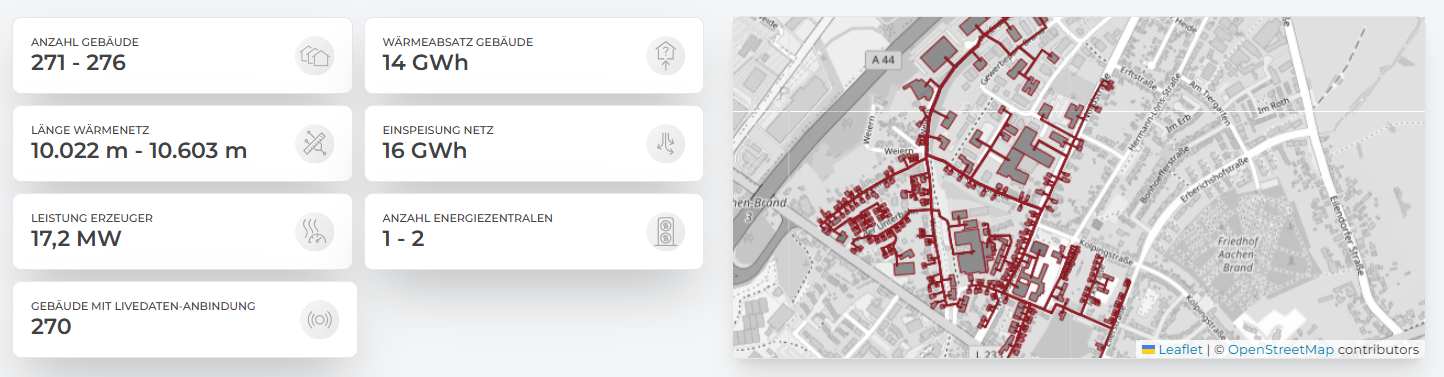
This provides you with a quick and informative overview of the most important parameters as soon as you open the project.
2. Create new feed-ins directly on the map using Design
Feed-ins can now be added directly in edit mode of the Design software module – simple, intuitive, and without detours. This significantly facilitates scenario comparisons and accelerates network modeling.
3. Dimensioning and analysis of networks with multiple feed-ins
The Digital Twin now provides even better support for modeling complex networks with multiple generators.
With multiple feed-ins, you can:
- define a feed-in order
- automatically calculate pipe dimensions for routes
- analyze the hydraulic behaviour
This makes it possible to realistically map and evaluate even demanding feed-in concepts.
4. Dynamic network simulation for time-based analysis
With the new dynamic network simulation, network and generation states can be analyzed over a freely definable time period.
Building load profiles can be:
- uploaded flexibly
- generated automatically (based on heat demand, usage category, and weather data)
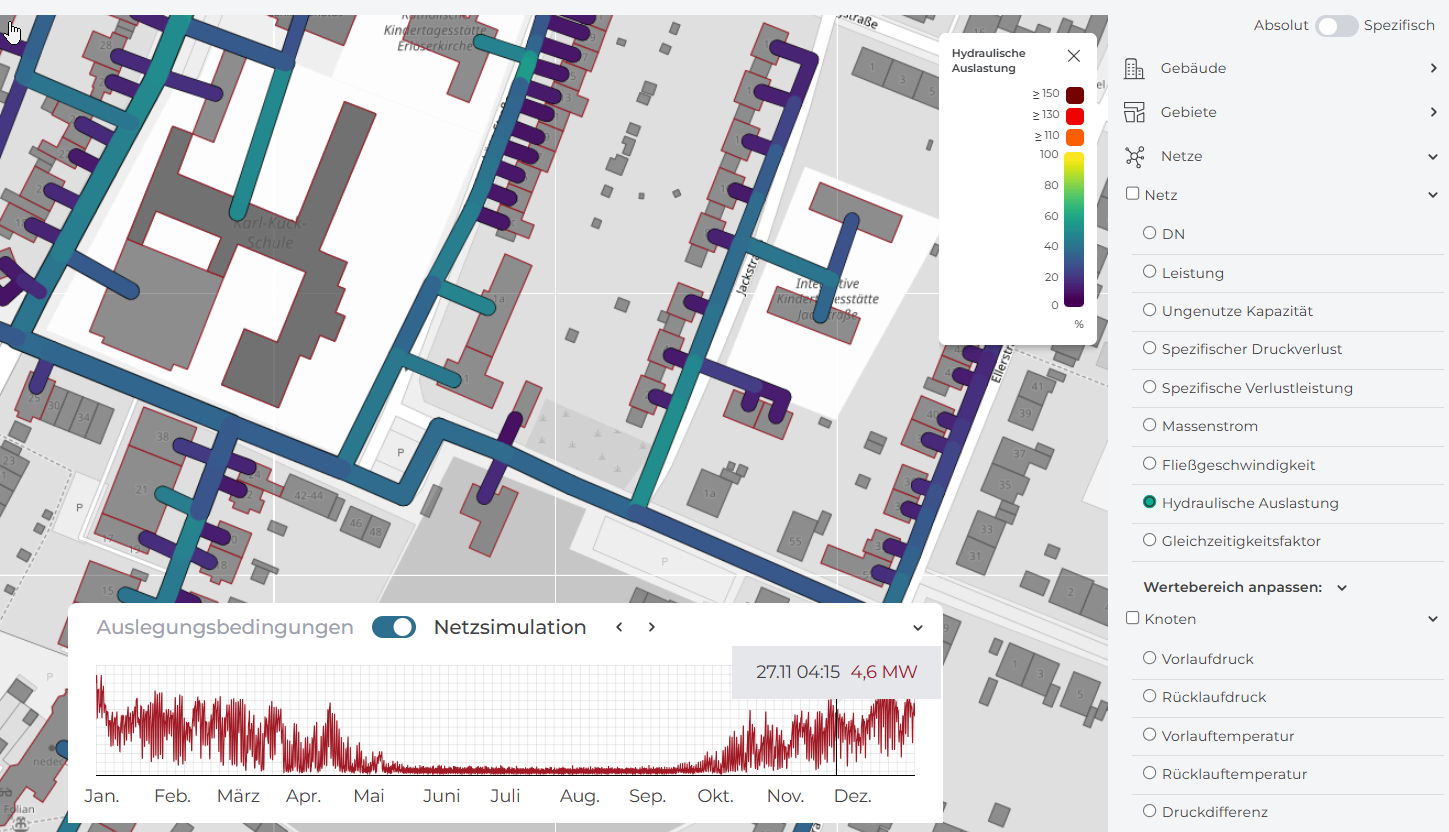
The system then simulates temporal network states as well as a generator load profile for the selected period. This opens up new possibilities for operational analyses and optimizations.
5. Optimized generation strategy
Based on the simulated generator load profile, the Digital Twin now automatically calculates and evaluates different generation strategies.
This makes it easy to identify which operating strategy is technically feasible and economically optimal.
Save the Date – next Feature Update Live
The date for the next webinar has already been set. You can register directly using the following link:
👉 Feature Update Live Q2/26 – April 22, 2026, 14:00–15:00
We look forward to your participation!