Project structure and process
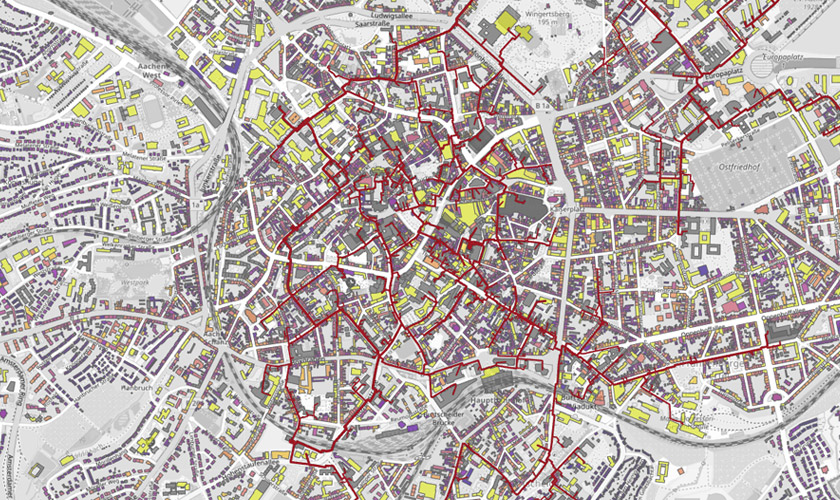
heatbeat was involved in the FunkSTA joint project as a partner for simulation, analysis, and the digital twin. The project structure followed a clearly defined process: During the project period, STAWAG, regio iT, and partners set up a comprehensive LoRaWAN-based measurement infrastructure in the building transfer stations. At the same time, heatbeat expanded its existing workflow for modeling the Aachen district heating network and developed a digital image of the network based on georeferenced data (GeoJSON). As high-resolution live measurement data became available step by step, it was integrated into the heatbeat Digital Twin via MQTT. Based on this, continuous analyses, KPI evaluations, and the development of automated services for operation, calibration, and optimization were carried out and validated in the real network.
Scope of services
The scope of services provided by heatbeat covered the entire chain from data analysis to simulation- and optimization-based digital services. Key components included the evaluation of live measurement data from the district heating network, the development of a standardized measurement data report for evaluating the efficiency of building transfer stations, and the derivation of specific recommendations for action for network operators. In addition, heatbeat developed automated processes for calibrating dynamic simulation models, which significantly reduced manual effort and increased model accuracy. Furthermore, a prototypical model predictive control (MPC) approach was designed and tested, which was proven to reduce heat losses and operating costs and forms the basis for future operational applications.
Use of the digital twin: heatbeat services in the project
The heatbeat digital twin served as the central integration and analysis platform in the project. High-resolution live measurement data from the LoRaWAN infrastructure was transferred via MQTT to a time series database and georeferenced to individual buildings and network sections. Based on this, heatbeat developed various visualization components, including building and measurement data dashboards and a map-based network view for quick identification of unusual operating conditions. In addition, the digital twin served as the basis for automated KPI evaluations, measurement data reports, simulation-based analyses, and optimization algorithms. The combination of real-time data and calibrated models created a new level of transparency that provided lasting support for both operational management and strategic planning.