Digital Twin Feature Update: March
In March, we continued to enhance the heatbeat Digital Twin in many areas—with a particular focus on improved support for complex network structures. This was complemented by enhancements for the seamless use of data from municipal heat planning, as well as new options for greater IT security. As usual, we’re briefly introducing these new features here in our monthly Feature Update, and we’d love for you to join us on April 22 for our free Feature Update Live Webinar, where we’ll once again present the most important updates from the past three months live.
Enhanced Support for Secondary Networks in Design and Simulation
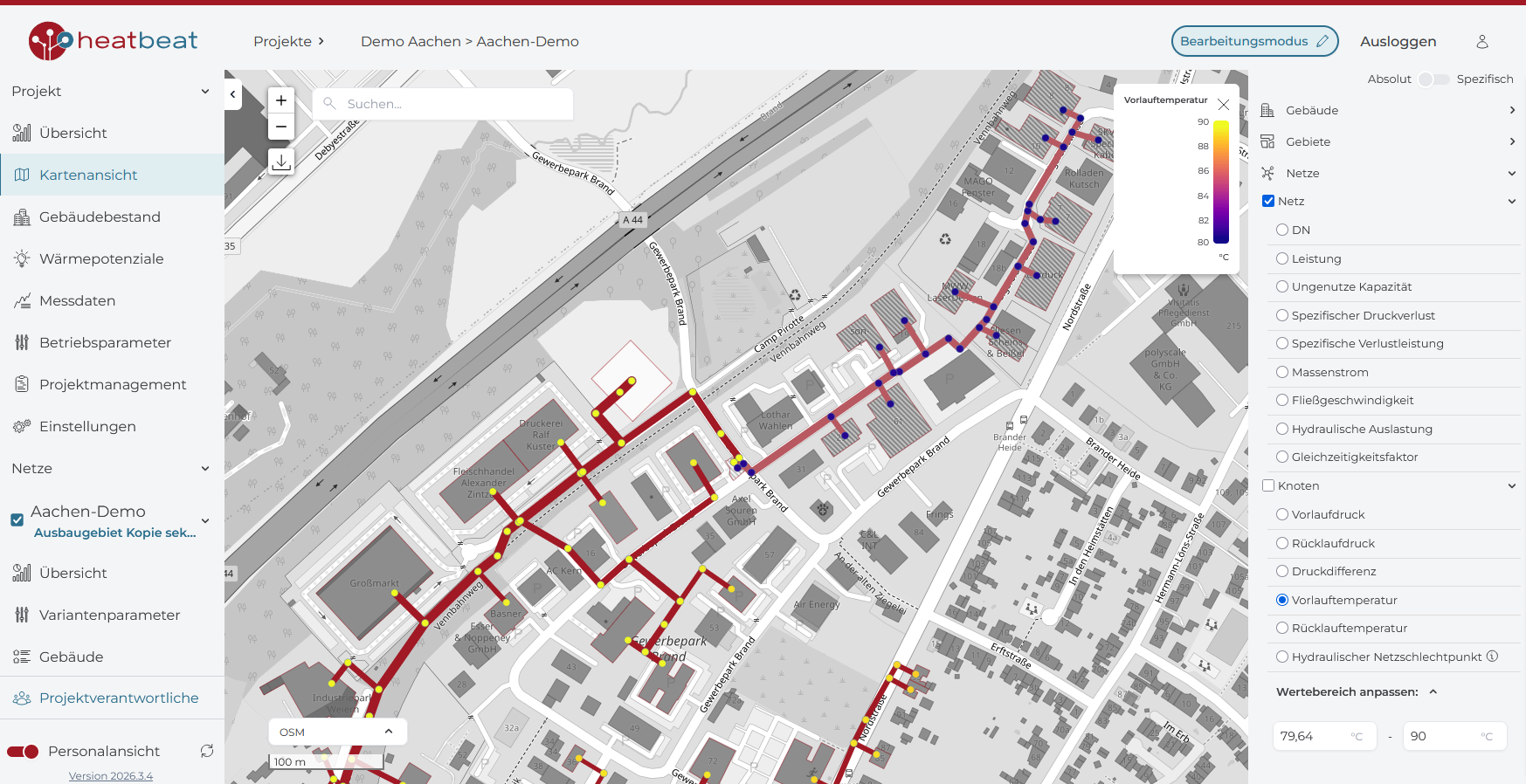
Secondary networks can play a crucial role in district heating systems—especially when the network includes different temperature levels, a mix of existing and new development areas, or substations with varying designs. Our major highlight for March is therefore the comprehensive expansion of secondary network functionality in the Design Module.
In both planning and simulation for operational optimization, we can now fully and flexibly model the interaction between the primary network and any number of secondary networks: from defining substations and automatically sizing new route sections to end-to-end simulation of the entire system. Together with our existing functions for modeling multiple feed-in points in the primary network and meshing in the network structure, this now allows even highly complex district heating systems to be modeled holistically.
By integrating this new support for secondary networks into our editing mode, you can do more than just map secondary networks that already exist in the heatbeat Digital Twin. For example, you can now independently draw, dimension, and simulate substations and secondary networks in the map view. And, of course, the reverse is also possible: you can use our digital twin to assess how changes in the network structure—such as the transition of individual customers or previously secondary-connected sections to primary network integration—impact overall operations.
With this enhancement, the Digital Twin becomes an even more powerful tool for creating realistic network scenarios and performing technical analyses—regardless of how complex the networks are.
More Detailed Suitability Zones for Municipal Heat Planning
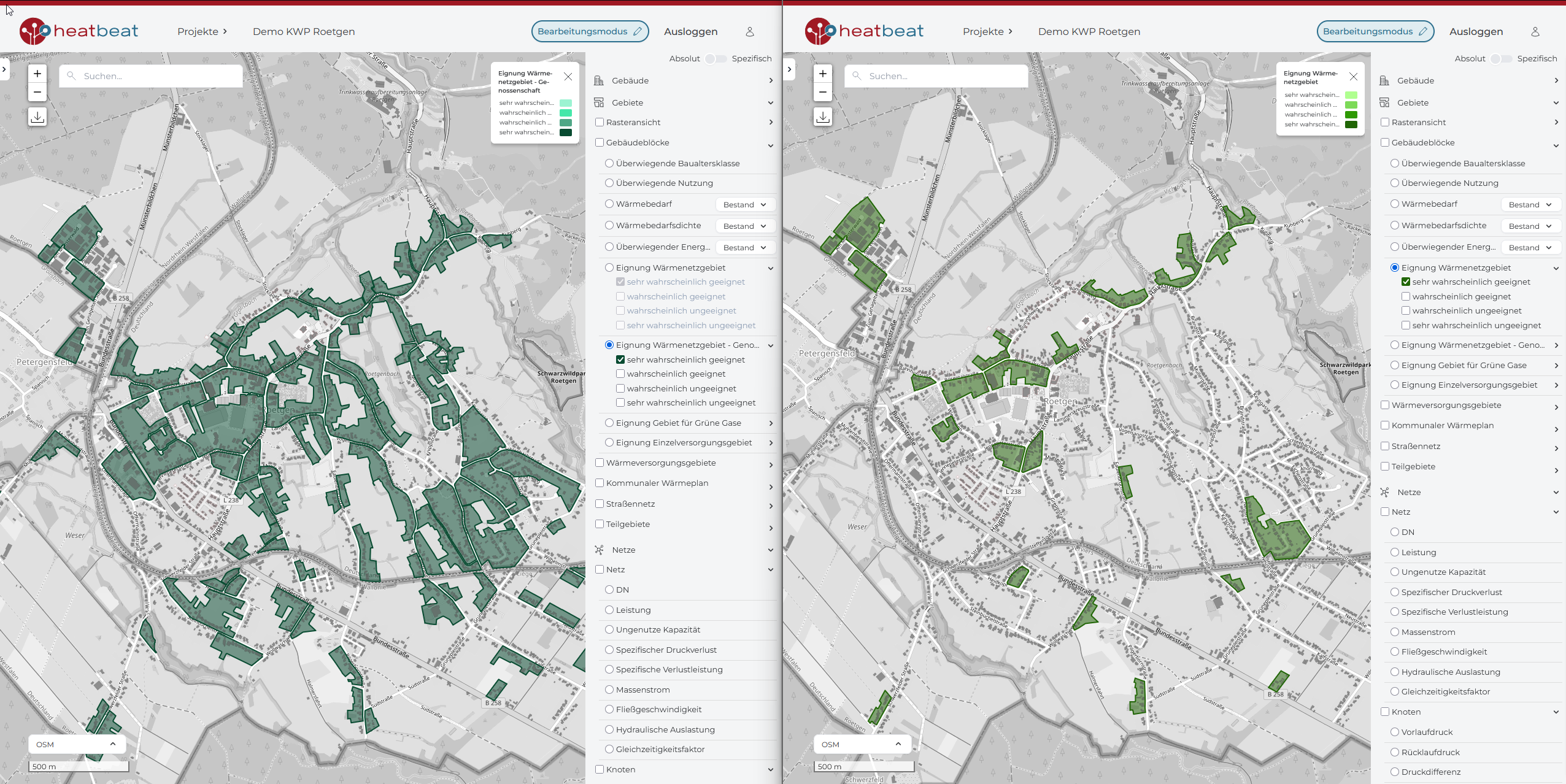
Municipal heat planning provides the strategic framework for determining where heating networks can be meaningfully expanded, upgraded, or newly constructed. Our heatbeat Digital Twin stands out because, building on our detailed mapping of heating networks, we can also incorporate all data from municipal heat planning. To make this data even more useful for technical planning, we added new, more detailed views to the Digital Twin in March.
Suitability zones can now be differentiated even more precisely—including by operator models and other structural criteria. This makes the transition from strategic planning to concrete network planning even easier.
Enhanced Security Through Two-Factor Authentication
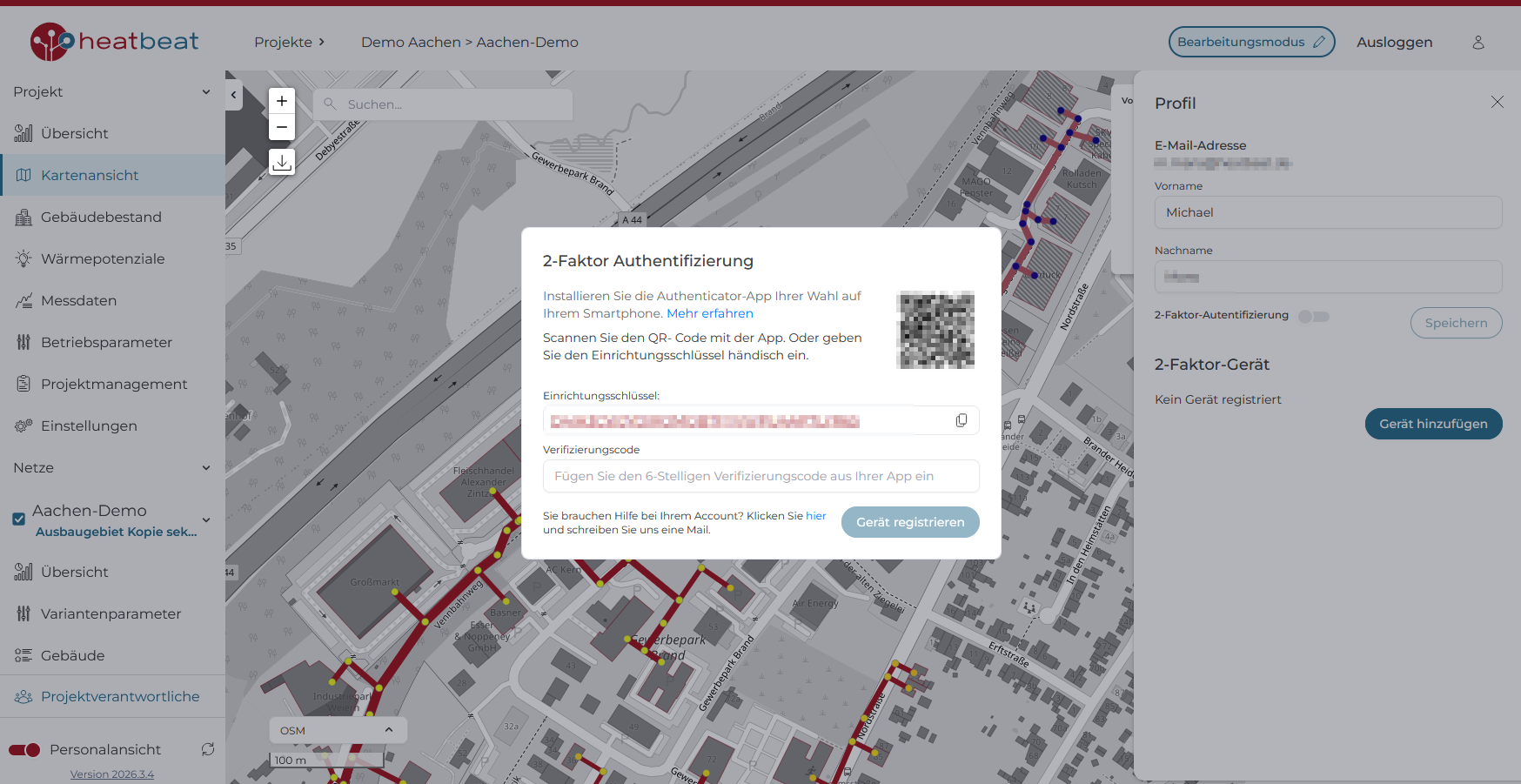
There have also been developments in IT security this March. Effective immediately, optional two-factor authentication (2FA) is available to all organizations in the heatbeat Digital Twin. When this feature is enabled, in addition to the password, a one-time password from a compatible authenticator app is required to log in to the heatbeat Digital Twin.
This provides an additional layer of protection for access—an important consideration for teams working with sensitive planning and inventory data or those whose internal IT policies mandate strict security requirements. Organizations can also opt to make 2FA mandatory for all employees to ensure a consistent level of security.
Additional Improvements
In addition to the examples mentioned above, we were able to implement numerous minor improvements in March. Among other things, you will now find even more help text next to input fields and parameters to further simplify your use of the digital twin. In addition, there are now optional, highly flexible map layers that allow general area information to be spatially organized and displayed. Our automatically generated network report has also been expanded to include, among other things, the new secondary networks in a coherent manner. And behind the scenes, we have initiated several efficiency and infrastructure improvements, which we are already using as a basis for further enhancements in upcoming releases.
Feature Update Live and Newsletter
In addition to this monthly update on our new features here on the blog, we also present the most important new developments in the heatbeat Digital Twin once a quarter during our Feature Update Live webinar. And with the next session coming up on April 22, the date is fast approaching. We’d be delighted if you took advantage of this opportunity and registered for free here.
In our newsletter, in addition to presenting selected research articles from the district heating sector, we also provide a brief monthly summary of the most important news from us and our heatbeat Digital Twin. You can subscribe to the newsletter at heatbeat.de/newsletter or read it directly here on the blog.